
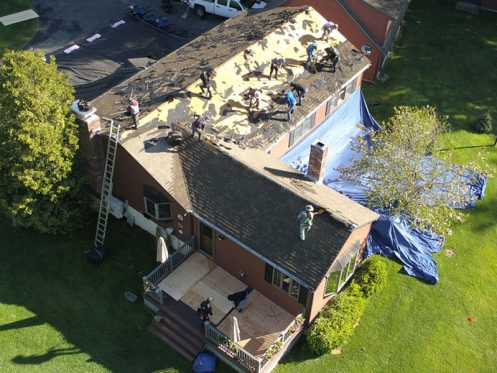
Planning for a major home project can be a complex process. Whether it’s concerns about the potential noise and disruptions or uncertainties about what to expect, it’s perfectly normal to have questions. Step-by-step information can make a huge difference to your overall experience, especially if you’re planning a project around a busy schedule.
But what does the roofing process look like once things get started? These types of projects often involve specialized equipment, multiple crew members, and significant material handling. Understanding the typical workflow is helpful in transforming the process into a more manageable series of events. This transparency will help you feel more in control and less anxious, as you know what to expect at each stage.
Let’s explore the timeline of a typical 1-2 day installation, replacement, or repair.
The Roof Inspection Process
With the total home improvement market in the U.S. reaching $526.1 billion, more people are looking at their roofing needs as a long-term investment in a secure and well-maintained home. The roof inspection process plays an important role in ensuring that your investment is made wisely. It’s an opportunity for a quality control manager to properly check the roof and its related areas. At Fraser Roofing, this includes assessing the current quality of existing roof ventilation and conducting a physical inspection of the overall decking condition.
Proper ventilation is crucial for the longevity of your roof and your home’s energy efficiency and indoor air quality. Poor ventilation can lead to heat and moisture buildup in the attic, which can prematurely age shingles, encourage mold growth, and result in higher utility bills. The structural integrity of the decking, which forms the roof’s direct foundation, is paramount. A compromised deck cannot adequately support the new roof, making a thorough inspection essential before any work begins.
Our team also documents any specific bruising and impact marks from hail (6-10 hail hits per square) in line with how insurance adjusters may also assess roof damage. Doing it this way helps streamline communication with insurers in the event of an insurance-covered roof replacement.
Getting Your Home Ready for the Roofing Process
Once your roofing replacement or installation plans are set, it’s time to prepare your living space for any upcoming work. Some of the most important things homeowners should do before the process begins include:
- Moving any cars from your drive and parking them securely elsewhere.
- Moving and securing any patio furniture away from the home’s perimeter.
- Securing or moving fragile indoor valuables, such as framed artwork, hanging light fixtures, or delicate shelves that may fall due to vibrations.
- Covering items in the attic to protect them from dust stirred up during the roofing installation process.
Step-by-step safety measures are also a priority. Our team will take additional precautions by placing tarps over any pools, AC units, and shrubs.

Tear-Off and Decking Assessment
Our team will then begin the work of removing all old shingles, stripping everything down to the wooden structural base. This is then fully inspected for faults, and any necessary repairs are made. We do this to ensure that the act of overlaying — where new shingles are placed over old ones — doesn’t occur.
We then check for rotted wood or any structural problems that could be hidden away. This process helps save homeowners significant amounts by reducing the need for future potential repairs and enhancing your roof replacement project with more long-term security.
Building It All Back Up
The next part of a roof repair or installation involves underlayment, which is a protective layer sandwiched between the decking of your roof and your chosen roofing material. While each roof will be different depending on the situation and type of damage, the following components are standard in a typical installation or repair:
- Drip edge and underlayment: A drip edge helps guide water off your roof, while the installed underlayment acts as an additional moisture barrier, preventing water from seeping under your shingles at the edges.
- Valleys and flashing: Roof valleys are V-shaped channels formed at points where two slopes meet. They are essentially paths for water drainage. Flashing is the material installed in valleys and other areas, such as vents or chimneys, that protects your home’s structure from moisture damage through inserts, valleys, or troughs.
- Durable material: We are specialists in durable and long-lasting shingle roofing, including slate, asphalt, and hand-split shake. Each material offers distinct advantages. Slate is highly durable and fire-resistant, making it a premium choice that can enhance curb appeal and retain its longevity. Hand-split shakes offer a rustic, natural aesthetic and possess good insulating properties. Asphalt shingles are highly versatile, cost-effective, and available in a wide array of colors and styles, offering protection and performance that suits a broad range of budgets.
The steps taken in any repair or replacement will always depend on your specific wants, needs, and budget. We also appreciate that there are many different parts and stages in this process. Our experts take the time to explain any relevant roofing industry terms and discuss why each step is important, instead of simply talking at you for hours on end using unnecessary jargon.
Cleaning and Quality Control
The job isn’t complete until your yard and surrounding areas are carefully checked and tidied. Our team will then inspect the finished work one last time to ensure it meets our highest standards.
Even with the most thorough post-project sweep, a stray nail can sometimes escape detection. For an extra layer of reassurance, many homeowners choose to perform a final magnet sweep of the yard and driveway after our crew leaves. We recommend this step for your peace of mind, especially if you have children or pets who spend a lot of time outdoors.

Making a Difference in the Roofing Process
A new roof is one of the best investments you can make in your home. However, like any investment, it’s vital to consider what’s right for your specific needs, budget, and overall home structure. After all, no two households are the same, and your health and safety should never be considered “just another job”.
Fraser Roofing has been meeting the planned and emergency roofing needs of families across Georgia and South Carolina for nearly 20 years. From the roof inspection process — where we can even help you file claims with your insurance to optimize your budget — to our attention to detail, we pride ourselves on delivering quality roofing through an open and honest approach.
Contact us today to schedule your free roof estimate and see what we can do for you.