
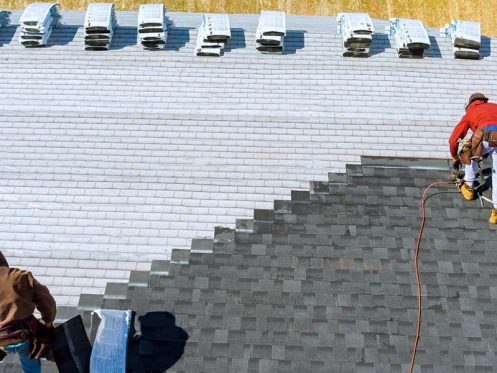
Tackling a roofing project yourself could seem like an easy way to save money, but the risks often outweigh the short‑term savings. Roofing requires specialized skills, extensive safety measures, and a specific understanding of how each material layer protects your home. Without that experience, it’s surprisingly easy to cause damage or put yourself in harm’s way. In many cases, bringing in a qualified roofing professional is the safer, more reliable choice.
As one of the top 100 roofing contractors in the U.S., Fraser Roofing has created this guide to walk you through the pros and cons of DIY versus professional roofing — covering cost considerations, safety factors, and the potential long‑term impact on your home.
The Risks of DIY Roofing
Minor roofing issues may look straightforward at first glance. But even small tasks can be dangerous when you lack the appropriate training and tools to complete these projects on your own. Here are some DIY dangers to be aware of.
- Incorrect diagnosis: Pinpointing the source of a roofing problem is essential. When you lack experience, you could misidentify the issue and address the wrong concern, leading to more damage down the line.
- Poor DIY work: Limited DIY skills can result in incomplete or improper repairs. Examples include shoddy sealing around chimneys or skylights and overlooking manufacturer installation requirements.
- Cause further damage: Even well-intentioned roofing work can exacerbate the situation. For example, walking on fragile shingles may result in cracks, and removing roofing material can compromise structural integrity.
- Safety concerns: Roofing work involves heights, uneven surfaces, and exposure to sharp tools and chemicals. Wet weather, loose shingles, and debris only increase the risk of slips, falls, and injuries.
- Compliance issues: Roofing projects must meet local codes and manufacturer standards. Improper work can create liability issues or jeopardize insurance coverage.
- Rising long-term costs: While DIY repairs may seem cost‑effective up front, poor craftsmanship often requires a professional to redo the work, resulting in a higher total price tag.
6 Signs You Should Reach out for Professional Roof Repair, Maintenance, Installation and Replacement Services
A leaking roof or visibly damaged shingles and tiles are obvious signs it’s time to call a professional. But catching problems earlier can save you a lot of stress now and prevent costly repairs down the road. Here are six warning signs to look for to prevent minor issues from snowballing into ongoing headaches.
1. Water Stains and Leaks
Call a professional contractor if you recognize stains and leaks. Experienced roofers will ensure these problems do not escalate into more severe issues.
Missing materials and damaged flashing or roofing felt can cause roof leaks. Early detection prevents structural damage.
2. Damaged or Missing Tiles
Because your roof’s surface is a critical waterproof barrier, weathering and other damage can weaken its protection and affect your home’s structural integrity.
Contact a reputable company to protect your property if you notice missing or damaged materials.
3. Moss, Algae, and Mold Growth
Moss, algae, and mold may seem minor at first blush. However, they are all red flags of moisture problems. Algae reduces the efficiency of your roof and makes it appear dirty. Moss absorbs moisture, which potentially causes decay.
Mold growth around the loft and ceiling areas of your home can also indicate a high amount of moisture in your roof. A professional can locate the source of the issue and take appropriate steps to prevent further damage.
4. Gutter and Professional Roof Maintenance Services
If you let your gutters become clogged with leaves and debris, you will prevent them from doing their job of directing rainwater away from your home. Routine cleaning can prevent these issues, but if you already see signs of damage, a professional can resolve the problem and keep your gutters in good shape.
5. Rising Energy Bills
Roof damage that extends to your ventilation or insulation will allow conditioned air to escape from your home. As your HVAC system works harder, your utility expenses will skyrocket. Hire a professional to inspect your roof insulation and prevent these issues.
6. Age
No roof lasts forever. Tile and slate have an average lifespan of 50 years. Asphalt shingles are less durable, ranging between 15 and 30 years. It’s wise to proactively replace an older roof before it fails and causes additional damage.

The Benefits of a Certified Professional Roofing Contractor
Your roof is central to your home’s structural integrity, so you owe it to yourself to maintain it. Though it may be tempting to cut corners and save costs, professional expertise offers safer, longer-lasting results. Consider these reasons to hire a certified roofing contractor.
- Compliance with warranty: Professional work preserves the terms of manufacturer warranties. Doing the project yourself or hiring an inexperienced person can void your warranty and lead to future complications.
- Long-term cost savings: Undoing DIY roofing errors can be costly and often requires a professional to step in anyway. Partnering with a contractor from the beginning saves time, money, and stress.
- Top materials and tools: Researching tools and materials can be time-consuming, and you may end up buying the wrong thing. Roofing contractors know where to find the best equipment for the job.
- Safety: Taking on a DIY roofing project can be hazardous if you lack the necessary training. Professional contractors are aware of the risks associated with working at heights and know how to mitigate them.
What Qualities to Look for in a Professional Roofing Company
Whether you require a complete roof overhaul, repair work, or maintenance, selecting a contractor for your project requires thorough research and careful planning. Here are the criteria to evaluate.
Valid Licensing and Insurance
Any contractor you work with must have the correct insurance and licensing to conduct the roofing work. Without these, you will be fully responsible for issues that arise during the work.
Ask potential partners to provide proof that they have the necessary permissions to complete your project.
Reputation and Credibility
Generally, the more experience a roofing contractor has, the better quality you receive from your project. Contractors who have been in business for years likely possess a wealth of knowledge regarding roofing materials and common issues.
Look for their level of experience and reviews from previous customers. It’s imperative to hire a contractor with extensive experience working with various roofing materials.
Quality Inspection Process
During the initial inspection, a reputable contractor will thoroughly investigate your roofing issues and provide a detailed, transparent project breakdown, including the materials and labor required to complete it.
Be sure to choose a roofing contractor that offers quality and honesty from the outset. Gaining a complete picture of the project scope prevents future surprises.
A Written Contract
Reliable companies always provide written contracts outlining all project details, including the estimated timeline, required equipment, labor costs, payment due dates, and the warranty and insurance details. Project details written in black and white provide peace of mind if issues arise.

Professional Roofing Services Near You
Fraser Roofing’s experienced contractors deliver top results for our customers in six physical locations. From expert roof services in Georgia to professional roofing services in South Carolina and Knoxville, Tenn., our team consistently delivers quality and value.
Reach out to us with your questions or request a free estimate for your roofing project today.