
Experienced homeowners understand the value of maintenance, encompassing everything from minor issues like replacing burned-out light bulbs to significant upgrades, such as installing a new, secure front door.
Damage to your home’s roof is an urgent concern. Ignoring the problem for even a few days can cause a snowball effect, leaving you with much more extensive and expensive repairs.
As one of the top 100 roofing contractors in the U.S., Fraser Roofing, LLC, has compiled this checklist to help you proactively address roof problems before they worsen.
1. Check for Hazards
Safety is always a priority. Many conditions that damage your roof, such as storms, can pose serious threats to your well-being. Follow these safety tips before doing anything else.
- Never climb onto a severely storm-damaged roof.
- Switch off electricity to damaged or wet areas.
- Do not climb onto your roof in windy conditions.
- Steer clear of fallen power lines, damaged chimneys, and loose or hanging shingles.
Working with an emergency roof repair company provides you with fast, reliable assistance, protecting your home before the situation worsens. Always call 911 to have first responders address severe damage ASAP.
2. Assess the Damage
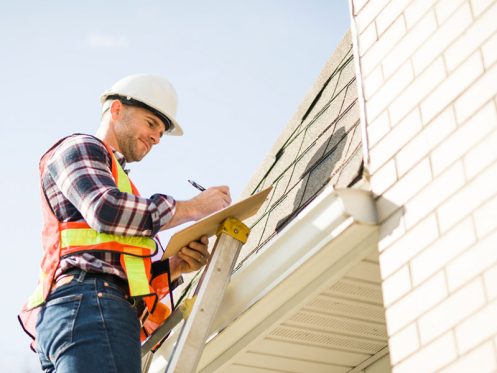
If it’s safe, start with a visual inspection to determine whether a simple temporary fix is possible or if you need immediate professional help. Because storms are a leading cause of roof damage, it’s always wise to check your roof after severe weather.
When You Can Repair Your Roof Independently vs. Calling for Expert Roof Assistance
If your roof only has minor issues like a few superficially missing shingles, you might be able to complete an emergency roof repair to manage the problem yourself.
Call a professional repair company if your roof has suffered extensive damage. DIY projects could cause further problems or invalidate your warranty or insurance claims.
Signs that you need to call in expert help include:
- Structural collapse
- Extensive water intrusion
- Large holes

3. Protect Your Home’s Interior
Next, you’ll need to protect your home’s interior from leaks, which can damage furniture, flooring, walls, and other possessions. Put buckets under drips to catch water, and move belongings away to minimize the damage.
4. Document the Problems
Once you’ve protected your home from immediate danger, you must document the damage if you plan to file an insurance claim.
Take photos and videos of:
- Your entire roof
- Interior problems caused by leaks, such as wet carpets, wall stains, and damaged belongings
- Fallen debris
- Loose or missing shingles
- Damaged flashing and torn felt
Take up-close and wide shots of all of these — it’s better to have too much evidence than not enough.
5. Install a Temporary Roof Tarp
After you’ve documented the damage, you can start addressing the primary concern. At this stage, your goal is to prevent further damage.
Install a temporary roof tarp, which will require:
- Heavy-duty tarpaulin at least three feet larger than the damaged area on every side
- Galvanized screws
- Sandbags
- Two-by-four anchor boards
Facing down from your roof, place the tarpaulin over the damaged area. Secure the top edge of the tarp by placing an anchor board on top of the tarp and screwing it into the roof. Make sure to stretch the tarp to prevent rain pooling.
Next, weigh down all the edges with sandbags. The tarpaulin should be taut, with the bottom edge extending past the gutter to prevent drainage issues.
6. Contact Your Insurance Company
Once you’ve done what you can to prevent further damage, hire a professional emergency roofing services provider to complete comprehensive repairs. It’s best to do this as soon as you can, as some policies have strict time limits for reporting roof damage. Having your documentation and photos ready will expedite the process.
The representative you talk with will ask you questions about when the damage occurred and its extent. In turn, you should ask them for:
- Your claim reference number
- A date range when the claims adjuster might visit
- A list of approved emergency roof repair contractors
- A repair spend limit
7. Find a Roof Repair Company
When it’s time to bring in help, look for a trusted emergency roofing company in Georgia, South Carolina, or Tennessee. Prioritize contractors with solid reputations, transparent pricing, and free estimates. If your insurance provider offers a list of approved contractors, that’s an excellent starting point.
After choosing your roofer, ask about long‑term protection. Some roof damage is unavoidable, but diligent maintenance and upgrades can make a world of difference. Inquire about:
- Installing mechanical tile fixings
- Upgrading flashings
- Reinforcing guttering
- Scheduling future inspections

Emergency Roofing in South Carolina, Georgia and Tennessee
Fixing roof damage as soon as possible will prevent further damage and ensure peace of mind. Fraser Roofing’s highly experienced team completes emergency roof repair service alongside other fast, effective solutions. We are available for same-day inspections and will help you file your insurance claim for timely repairs.
What’s more, thanks to our 10-year workmanship warranty, you can feel confident that we will repair your roof to the highest standard.
Contact us today to learn more about our South Carolina, Georgia and Tennessee emergency roofing services.